
01Business Consulting
Strategy, structure, and standing executive advisory.
What does the consulting practice actually do?
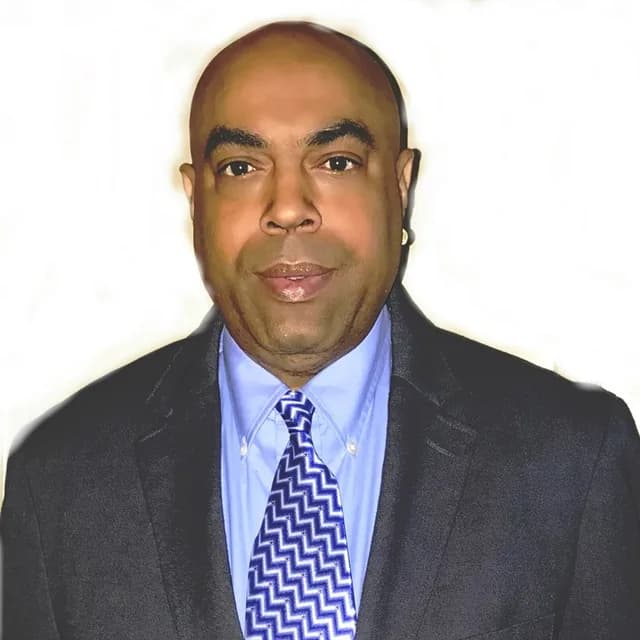
It helps principals surface and settle the small set of structural decisions that decide the rest of the business — where capital goes, who holds decision rights, and what actually gets finished. The work is a diagnosis, a written plan, and an operating cadence, led directly by Dr. David T. Randolph without an associate hand-off.
Do you work with companies of a particular size?
The roster is deliberately small and centered on founder-stage and second-generation firms, family offices, and boutique advisory businesses. The common thread is not size but the moment — a company that has quietly outgrown the way it is run and faces a decision that matters more than the last.
How is this different from a large consulting firm?
Every engagement is led by the principal himself. There is no team of associates, no broken thread between counsel and execution, and no long deck standing in for a decision. Recommendations are reduced to one page and reconciled to cash and calendar before they are delivered.
Can you help with succession or a generational transition?
Yes. Succession, ownership transfer, and continuity are among the structural questions the practice raises deliberately — ideally while there is still time to do them well rather than under the pressure of an urgent transition.
02Financial & Investment Advisory
Capital strategy, planning, and risk — read together.
Are you a registered investment adviser?
No. TR Group International provides consulting and advisory services. It does not hold itself out as a registered investment adviser, does not manage client assets, and does not provide securities-brokerage services. Engagements are advisory — framing, diagnosis, and counsel that a principal carries into their own decisions.
What is the difference between a capital strategy and a cash flow plan?
A cash flow plan answers what money is coming in and going out. A capital strategy answers what the capital is for, how it should be allocated, in what sequence, and at what level of risk — on one page a leadership team can defend. Many owners have the former and call it the latter; the work often begins by separating the two. See the article “Capital strategy, without the jargon.”
Do you sell financial products or earn commissions?
No. There are no products to sell and no commissions involved. The advisory relationship is engaged directly, so the counsel is independent of any product outcome.
When is financial advisory most useful?
Most often before a capital event, a first outside investor, or a major structural decision — the moments when capital, liquidity, and risk need to be read together rather than one at a time.
03Operations & Logistics
Operating-model design and the cadence that survives scale.
What does an operations engagement produce?
A read of the real cost and service drivers, a margin-ranked list of fixes, and review cadences the team can run itself. The emphasis is execution — the best plan in the room loses to the plan that actually moves through the building.
Do you only work with logistics companies?
No. Operations and logistics work applies wherever an operating model has outgrown its original design — distributors and goods-movement businesses, certainly, but also service firms and agencies where workflow and margin have drifted out of alignment.
Will you help implement the changes, or just recommend them?
The practice designs the operating model and the cadence, then works alongside the leadership team as they execute — with the advisor's role deliberately narrowing over time as the team takes ownership.
04Notary (Courtesy)
Mobile notary, loan signing, and apostille coordination.
Do you charge for notary services?
No. TR Group International provides notarial services as a courtesy to the public, with no charge for the notarization itself. For mobile appointments, travel, transportation, parking, tolls, courier services, and other reasonable out-of-pocket expenses may apply, and are quoted before the appointment is confirmed.
What identification do I need for a notarization?
California law requires each signer to present a current, government-issued photo ID — most commonly a driver license, state identification card, or passport. Every signer is identified individually before the notarial act is performed.
Should I sign the document before the appointment?
No. Signatures on the pages being notarized must be made in the presence of the notary. Bring the document complete but unsigned so it can be executed at the appointment.
Do you come to me, or do I come to you?
The practice is mobile by default. Appointments are held wherever is most practical — the office, a home, a title company, or a hospital — across Woodland Hills and greater Los Angeles County. See the mobile notary page for details.
Can you handle a full loan-signing package?
Yes. As a notary signing agent, the practice handles refinance, purchase, HELOC, reverse mortgage, and seller packages, by an agent who understands both the documents and the closing calendar. See the loan signing page.
Can you notarize documents that will be sent overseas?
Yes. For documents requiring an apostille, the practice notarizes the document correctly and coordinates with the California Secretary of State so it is authenticated for international use. See the apostille coordination page.
What is your notary commission?
Commission #2524554, Los Angeles County, with a term running June 24, 2025 through June 23, 2029.
05Engagement & Process
How the work is scoped, run, and kept in bounds.
How does an engagement begin?
Every engagement begins with a no-obligation scoping call. If it is a fit, scope, sequence, cadence, and fee are put in writing in an engagement letter before any work begins.
What if the engagement scope changes?
Scope changes are written and agreed before work continues. Mission creep is treated as a separate decision, not a quiet expansion of the relationship.
Do you sign an NDA?
Discretion is non-negotiable. An NDA is signed at the scoping-call stage when requested, and discretion is the default whether or not one is in place.
Can I move between engagement plans?
Yes. Most clients begin with a Diagnostic and move into Standing Advisory afterward, and some do not — which is the right outcome too. The plan is matched to the work in front of you, not the other way around. See the pricing page for how the plans map to common engagement shapes.
06Scheduling & Contact
Where the practice is, and how to reach it.
Where is the practice located?
TR Group International is based at 6250 Canoga Avenue, Woodland Hills, CA 91367-8305, serving Los Angeles County and Southern California.
How quickly will I hear back?
Correspondence is answered in writing, from the principal, within one business day. Most notary appointments and scoping calls can be confirmed within twenty-four hours.
Are sessions remote or in person?
Consulting working sessions are held by phone or video, with written reviews delivered in writing; certain engagements include an in-person strategic review. Notary appointments are mobile and in person by their nature.
How do I schedule a consultation or a signing?
Use the contact page to send a request, or call directly. For a consultation, a booking link is available to reserve a time; for a signing, include the document type, signer count, and preferred time and place.
—Read Further
The pages behind the answers.
·Still Have a Question?If your question is not here,
If your question is not here,
ask it directly.
A short, no-obligation conversation is the fastest way to an answer — about an engagement, a signing, or whether the practice is the right fit.
- Direct line747-208-2074
- Primary emailinfo@trgroupinternational.com